Industrial Ficin Enzyme Meat Tenderization Supplier Guide
B2B ficin enzyme for meat tenderization. Activity-verified lots, dosage and pH guidance, COA/TDS/SDS, and pilot-batch validation before scale orders.
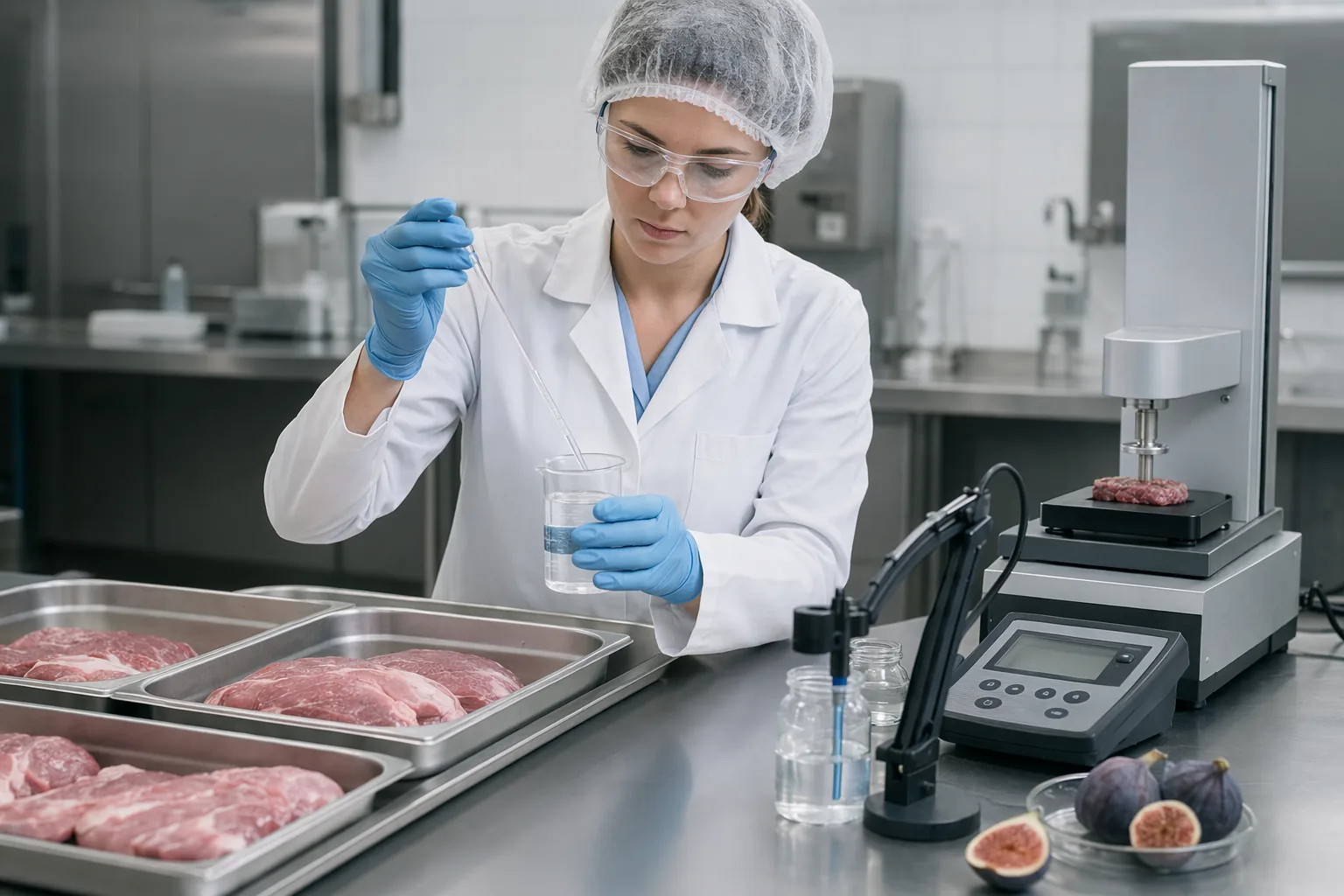
For meat processors, ficin offers targeted proteolysis to improve bite, yield perception, and consistency when dosage, contact time, pH, and heat inactivation are controlled.
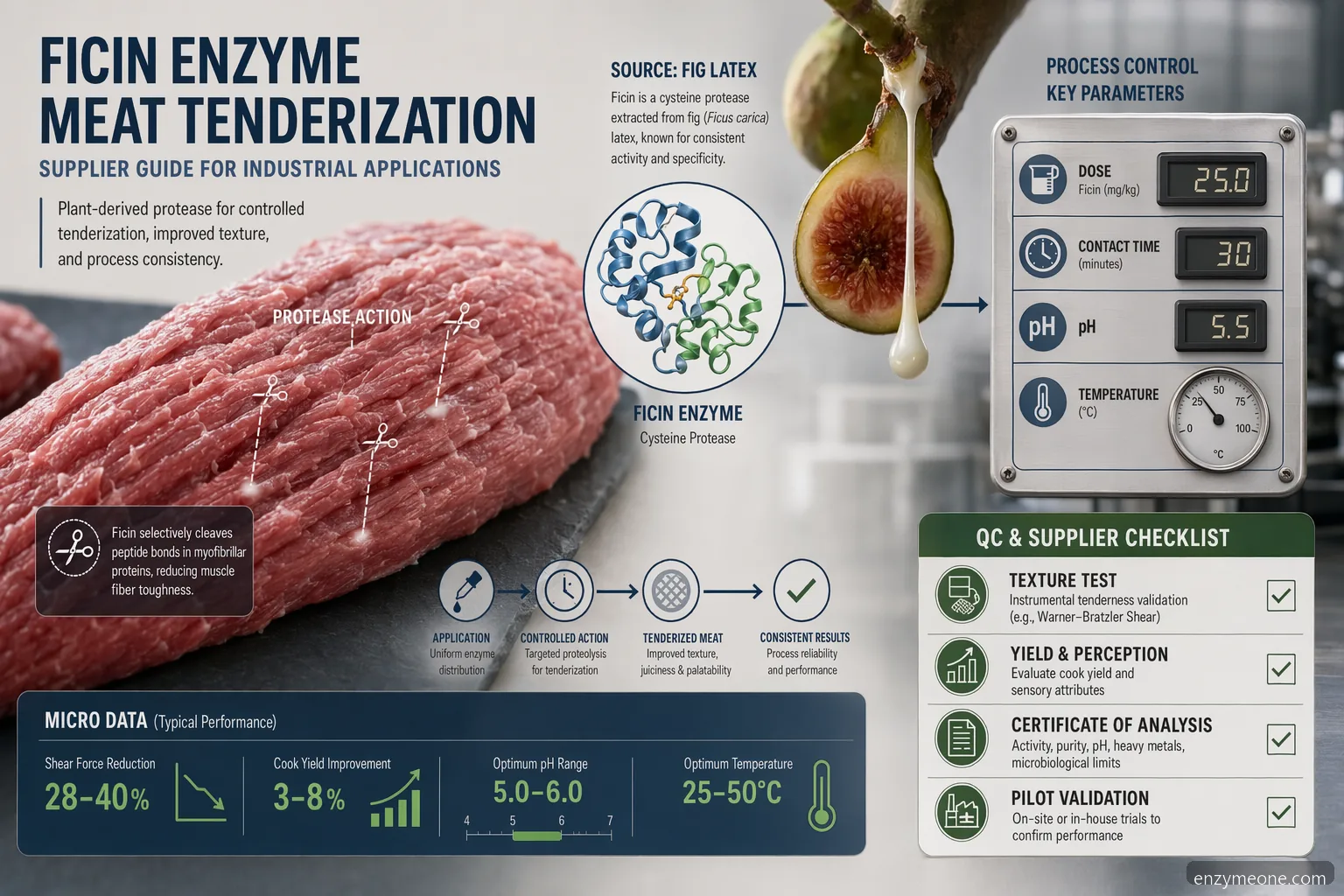
Why Meat Processors Use Industrial Ficin
Ficin is a cysteine protease obtained from fig latex and used as an industrial fig enzyme meat tenderization aid. It hydrolyzes muscle proteins and connective tissue proteins, helping processors manage tenderness in beef, poultry, pork, and formed or marinated products. Compared with a simple mechanical tenderizing step, ficin enzyme for meat tenderization can be dosed through brines, marinades, tumbling systems, surface sprays, or injection processes where uniform distribution is achievable. The commercial objective is controlled softening, not uncontrolled breakdown. Over-treatment can create mushy texture, excessive purge, or sliceability problems, so buyers should select a grade with clear activity units and run validation against the target cut, particle size, salt level, phosphate system, and thermal process. Industrial ficin meat tenderization is most successful when procurement, R&D, QA, and operations agree on measurable acceptance criteria before purchasing production quantities.
Useful in marinades, brines, injection, tumbling, and formed meat systems. • Best suited to controlled tenderness improvement, not masking poor raw material control. • Requires validation by product format, process time, and target eating texture.
Practical Processing Conditions
For development trials, treat ficin as an activity-based ingredient rather than a commodity powder. Many meat systems operate near pH 5.5 to 6.5, where ficin can be effective, although supplier-specific grades may show broader activity across approximately pH 5.0 to 8.0. Temperature strongly affects reaction rate. Chilled marination at 2 to 8°C provides slower, more controllable action; 20 to 40°C accelerates tenderization and should be limited to validated, food-safe process windows; 50 to 60°C may increase proteolysis quickly but is usually a short, controlled processing step rather than long holding. Initial dosage screens often compare about 0.005% to 0.10% enzyme preparation by meat weight, or an equivalent activity-based range specified by the supplier. Final dosage should be based on activity units, contact time, texture endpoint, microbial controls, and whether subsequent cooking or heating sufficiently inactivates the enzyme.
Start low and increase only after texture and purge data are reviewed. • Record enzyme activity units, not only addition rate. • Validate enzyme inactivation under the actual cook or heat process.
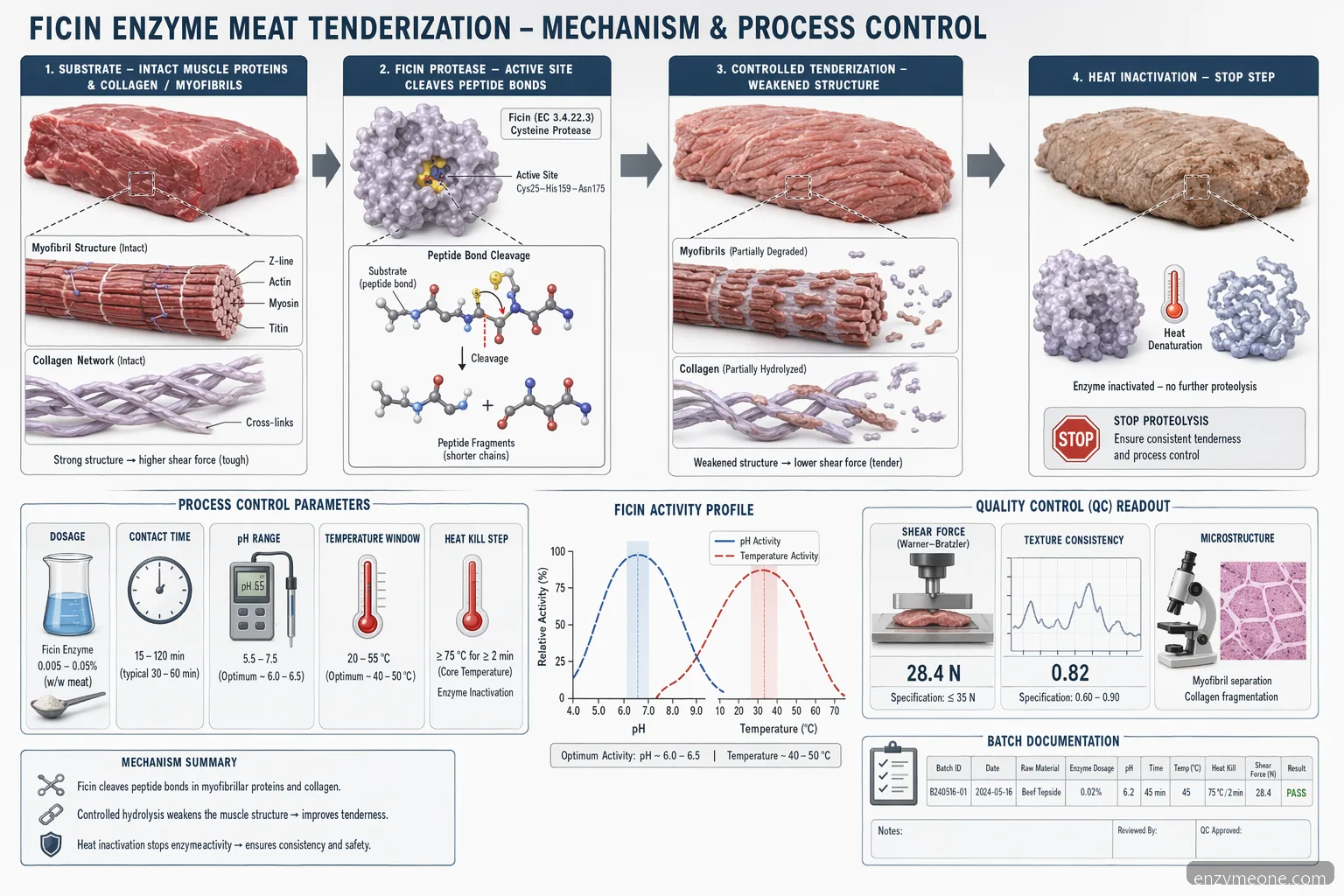
QC Checks for Tenderization Performance
A reliable industrial ficin enzyme meat tenderization program uses both bench tests and plant QC checks. In R&D, compare untreated control, low, medium, and high ficin dosages using the same raw material lot when possible. Measure pH, brine pickup, marinade distribution, contact time, temperature history, purge, cook yield, and finished texture. Texture can be monitored with shear force, compression, sliceability, or trained sensory panels depending on the product. Operations should also check mixing uniformity and hold-time variation, because local over-dosing can create soft spots. QA should confirm that microbiological controls remain appropriate if warmer or longer enzyme contact steps are introduced. For purchased lots, review the COA for activity, appearance, moisture or loss on drying if listed, and microbiological parameters. Retain samples and compare performance between batches before changing the production addition rate.
Use a no-enzyme control in every pilot trial. • Track purge and cook yield alongside tenderness. • Check lot-to-lot enzyme activity before production release. • Confirm food safety controls when changing time or temperature.
Supplier Qualification and Documentation
A qualified fig enzyme supplier for meat tenderization should provide documents that help buyers assess performance, safety handling, and regulatory fit for the intended market. Ask for a current Certificate of Analysis, Technical Data Sheet, Safety Data Sheet, recommended storage conditions, shelf-life basis, country of origin, raw material source, carrier or excipient declaration, allergen statement, and any food-grade compliance statements relevant to your jurisdiction. Do not rely on generic activity claims without a test method or unit definition. If your company also evaluates industrial ficin enzyme protein hydrolysis or industrial ficin enzyme pharmaceutical processing, separate the qualification requirements by application; food tenderization grades and pharmaceutical process aids may require different specifications and documentation. Supplier qualification should include sample evaluation, batch traceability, change notification expectations, and confirmation that technical support is available during pilot and scale-up work.
Request COA, TDS, SDS, storage guidance, and shelf-life information. • Confirm carrier, excipient, and allergen declarations. • Ask how activity is measured and how batch variation is controlled. • Define change notification and traceability expectations in purchasing terms.
Pilot Validation and Cost-in-Use
The lowest price per kilogram is not always the lowest cost-in-use. A more concentrated ficin enzyme supplier for meat tenderization may deliver the same tenderness at a lower addition rate, while a less consistent product can increase waste, rework, or customer complaints. Pilot validation should compare enzyme lots at equal activity, not equal weight, and should include the intended equipment, brine strength, vacuum tumbling profile, injection pressure, temperature, and hold time. Calculate cost-in-use per metric ton of finished product, then weigh that against texture performance, yield, purge, processing flexibility, storage stability, and technical support. For production approval, define a target dosage band, acceptable activity range, QC release checks, and corrective actions if texture is outside specification. This approach helps buyers source industrial fig enzyme meat tenderization ingredients with predictable performance rather than trial-and-error purchasing.
Compare suppliers at equal declared activity. • Calculate cost per finished ton, not just cost per enzyme kilogram. • Include yield, purge, rework, and complaint risk in the economic model.
Technical Buying Checklist
Buyer Questions
Ficin enzyme is used to hydrolyze selected meat proteins and connective tissue proteins, improving tenderness when the reaction is controlled. In industrial meat processing it can be added through marinades, brines, injection, tumbling, or surface treatment. The final effect depends on enzyme activity, dosage, pH, temperature, contact time, distribution, and heat inactivation. Pilot trials are essential because overuse can cause soft or mushy texture.
Choose a supplier that provides consistent activity, application support, and complete documentation. At minimum, request a COA, TDS, SDS, storage guidance, shelf-life information, allergen statement, carrier declaration, and traceability details. Ask how activity is defined and tested, whether batch-to-batch variation is controlled, and whether samples are available for pilot validation. Supplier qualification should also include change notification expectations and technical support during scale-up.
A practical first screen is often about 0.005% to 0.10% enzyme preparation by meat weight, but the correct range depends on the supplier’s declared activity, meat substrate, contact time, pH, temperature, and desired tenderness. Run low, medium, and high levels against a no-enzyme control. Convert the best result to activity units so future lots and alternative suppliers can be compared accurately.
Many meat products are near pH 5.5 to 6.5, which is generally suitable for ficin tenderization, while specific grades may show useful activity across approximately pH 5.0 to 8.0. Chilled processing at 2 to 8°C gives slower control, while 20 to 40°C accelerates action and requires validated food-safety controls. Warmer short steps may be possible, but they should be tested carefully for texture and microbiology.
Calculate cost-in-use by the enzyme activity needed per metric ton of finished product, not only by the purchase price per kilogram. Include dosage, brine pickup, yield, purge, rework risk, texture consistency, storage stability, and supplier support. Compare suppliers at equal activity and under the same pilot conditions. A higher-priced but more consistent enzyme can be more economical if it reduces waste or improves process control.
Ficin for Research & Industry
Need Ficin for your lab or production process?
ISO 9001 certified · Food-grade & research-grade · Ships to 80+ countries
Frequently Asked Questions
What is ficin enzyme used for in meat tenderization?
Ficin enzyme is used to hydrolyze selected meat proteins and connective tissue proteins, improving tenderness when the reaction is controlled. In industrial meat processing it can be added through marinades, brines, injection, tumbling, or surface treatment. The final effect depends on enzyme activity, dosage, pH, temperature, contact time, distribution, and heat inactivation. Pilot trials are essential because overuse can cause soft or mushy texture.
How should we choose a ficin enzyme supplier for meat tenderization?
Choose a supplier that provides consistent activity, application support, and complete documentation. At minimum, request a COA, TDS, SDS, storage guidance, shelf-life information, allergen statement, carrier declaration, and traceability details. Ask how activity is defined and tested, whether batch-to-batch variation is controlled, and whether samples are available for pilot validation. Supplier qualification should also include change notification expectations and technical support during scale-up.
What dosage of industrial ficin should be tested first?
A practical first screen is often about 0.005% to 0.10% enzyme preparation by meat weight, but the correct range depends on the supplier’s declared activity, meat substrate, contact time, pH, temperature, and desired tenderness. Run low, medium, and high levels against a no-enzyme control. Convert the best result to activity units so future lots and alternative suppliers can be compared accurately.
What pH and temperature conditions are suitable for ficin?
Many meat products are near pH 5.5 to 6.5, which is generally suitable for ficin tenderization, while specific grades may show useful activity across approximately pH 5.0 to 8.0. Chilled processing at 2 to 8°C gives slower control, while 20 to 40°C accelerates action and requires validated food-safety controls. Warmer short steps may be possible, but they should be tested carefully for texture and microbiology.
How do we calculate cost-in-use for ficin meat tenderization?
Calculate cost-in-use by the enzyme activity needed per metric ton of finished product, not only by the purchase price per kilogram. Include dosage, brine pickup, yield, purge, rework risk, texture consistency, storage stability, and supplier support. Compare suppliers at equal activity and under the same pilot conditions. A higher-priced but more consistent enzyme can be more economical if it reduces waste or improves process control.
Related: Ficin Enzyme Uses for Industrial Proteolysis
Turn This Guide Into a Supplier Brief Request a ficin enzyme sample, COA/TDS/SDS package, and pilot-scale dosage guidance for your meat tenderization process. See our application page for Ficin Enzyme Uses for Industrial Proteolysis at /applications/ficin-enzyme-uses/ for specs, MOQ, and a free 50 g sample.
Contact Us to Contribute