Ficin Enzyme for Industrial Meat Tenderization
Source ficin enzyme for meat tenderization with practical guidance on dosage, pH, temperature, QC, COA/TDS/SDS, and supplier qualification.
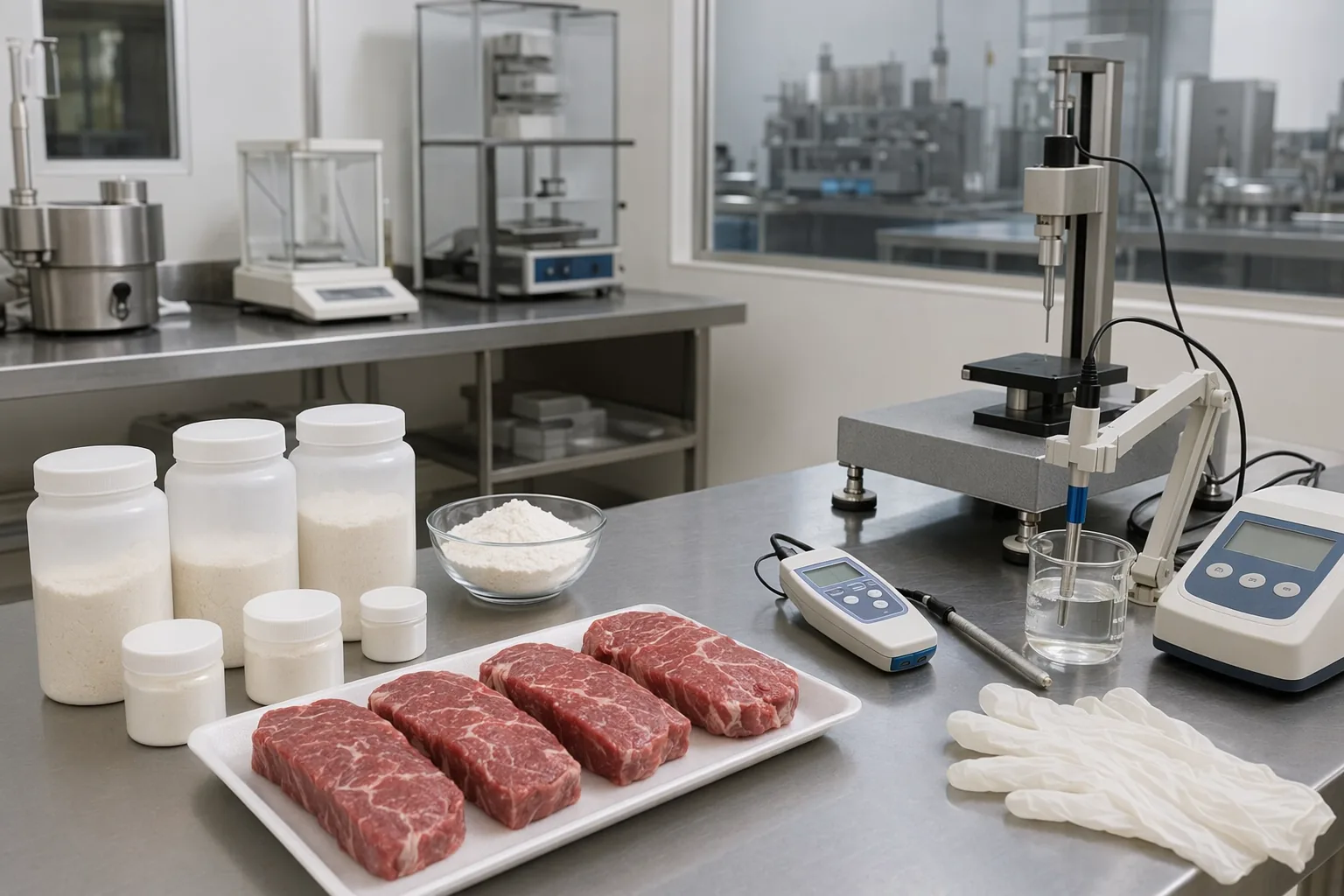
A practical sourcing guide for processors evaluating ficin enzyme for controlled tenderization, protein modification, and consistent cost-in-use.
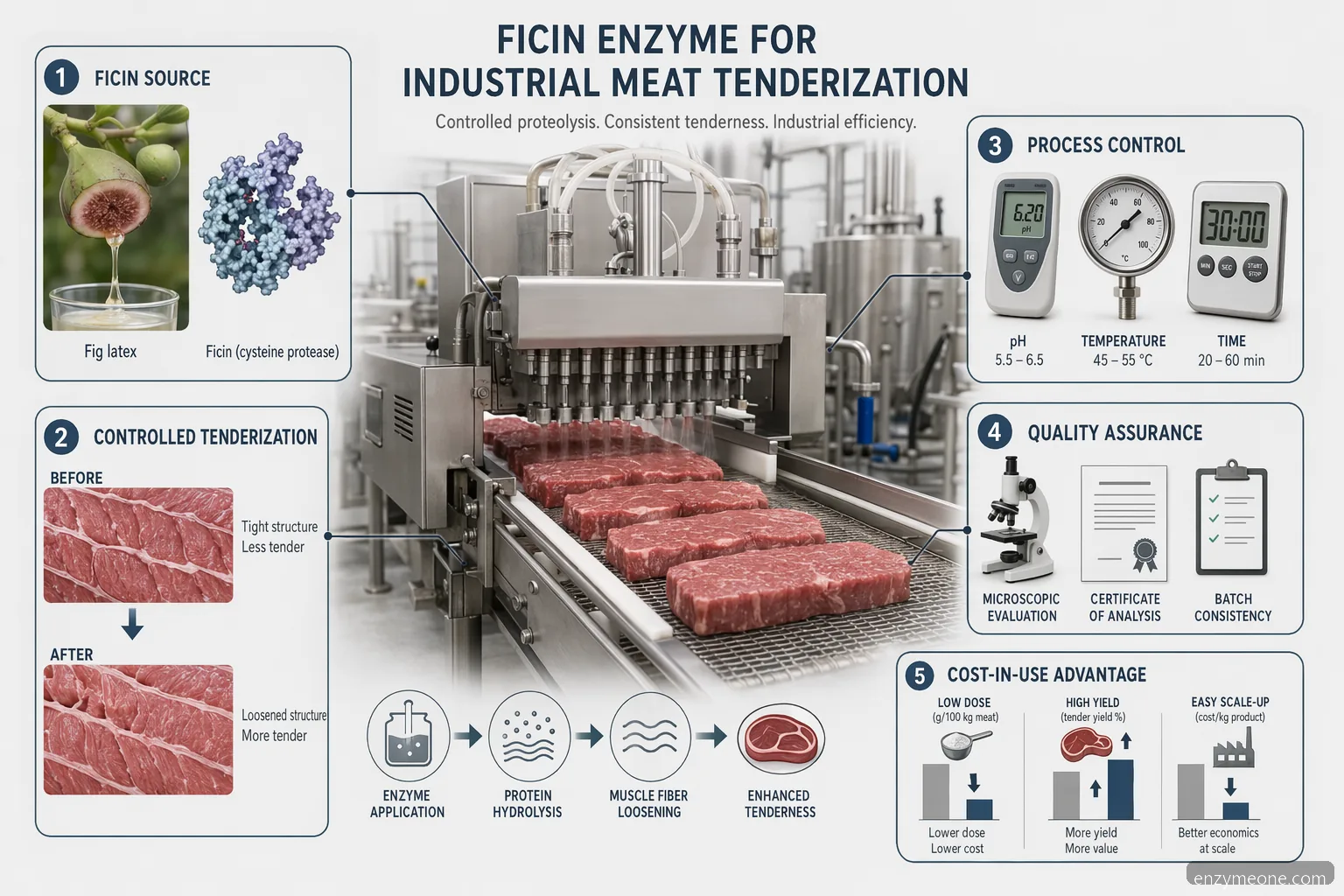
What Is Ficin Enzyme?
Ficin enzyme is a plant-derived cysteine protease obtained primarily from the latex of fig plants, commonly Ficus carica. In meat processing, its function is to cleave peptide bonds in muscle proteins and connective tissue, helping reduce toughness when dosage, time, temperature, and pH are controlled. Buyers searching for what is ficin enzyme often compare it with papain and bromelain because all are proteolytic enzymes used for protein hydrolysis. Ficin can be supplied as powder, granule, or liquid, depending on the manufacturer and formulation carrier. For B2B procurement, the important question is not only the ficin enzyme source, but also activity definition, stability, food-grade suitability, microbiological quality, and documentation. EnzymeOne supports industrial buyers by aligning product selection with application trials, quality requirements, and the realities of plant-scale meat tenderization.
Proteolytic enzyme from fig latex • Used for controlled protein hydrolysis • Relevant to meat tenderization and protein modification • Specified by activity, format, carrier, and QC profile
Why Use Ficin for Meat Tenderization?
The main ficin enzyme function in meat tenderization is selective protein breakdown. When used correctly, ficin can improve bite, reduce perceived toughness, and support value optimization for cuts that require more consistent texture. It is especially relevant where processors need an enzyme-based tenderizing step in marinades, injection systems, tumbling, or topical applications. The uses of ficin enzyme extend beyond meat, including protein hydrolysis and certain pharmaceutical or laboratory applications, but process design differs by market and regulatory context. For meat plants, the goal is controlled hydrolysis without mushy texture, purge increase, or flavor defects. That requires measuring enzyme activity, matching dosage to substrate, and defining a validated inactivation or cook step. A ficin meat tenderizer should be treated as a processing aid or ingredient according to local regulations and label requirements.
Supports tenderness improvement in tougher cuts • Can be applied through marinade, injection, tumbling, or surface treatment • Requires control to avoid over-tenderization • Best evaluated by cost-in-use and finished product performance
Typical Process Conditions for Pilot Trials
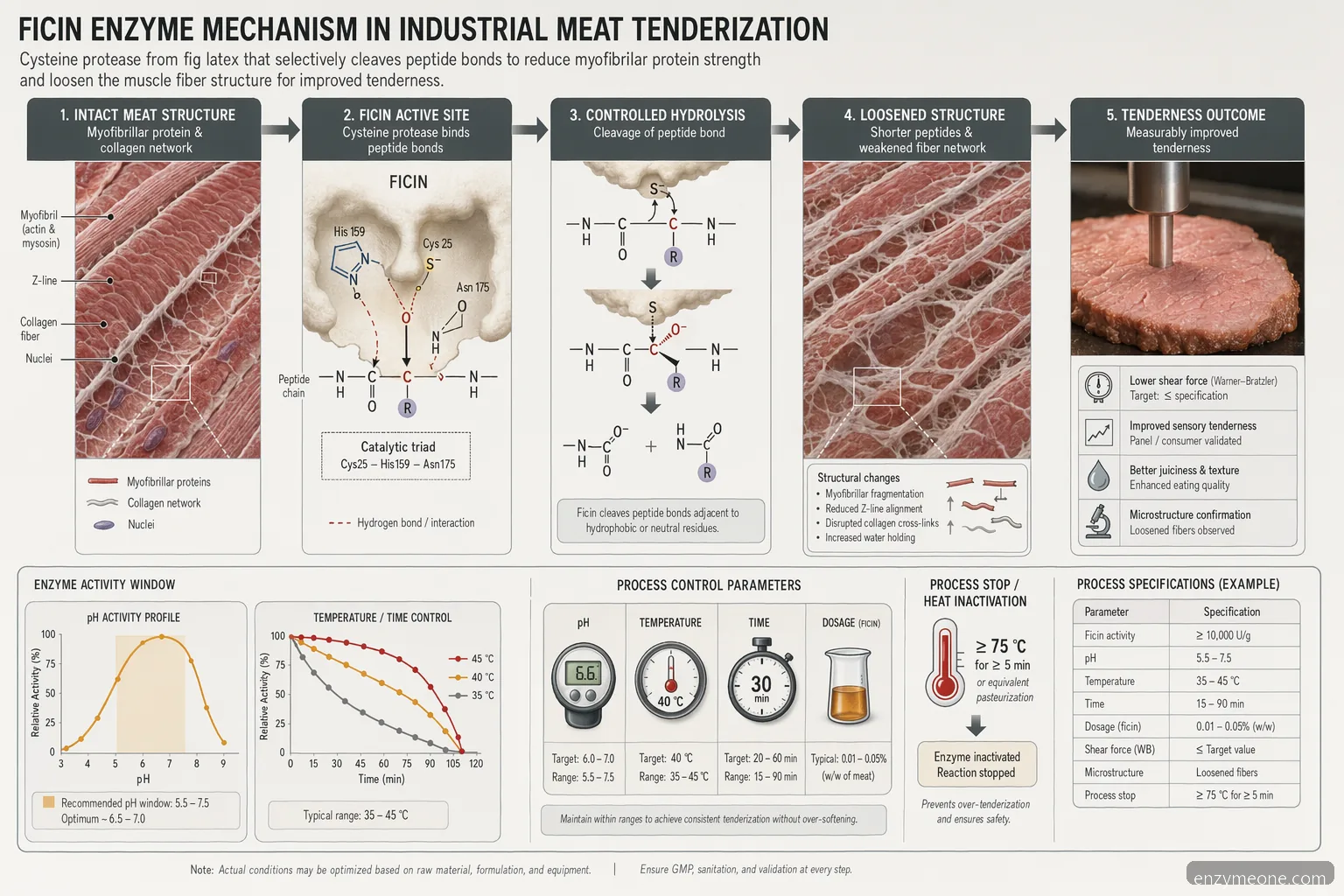
Pilot validation should start with conservative conditions and expand only after texture, yield, and sensory data are reviewed. Ficin generally performs in mildly acidic to neutral systems, with many meat applications screened around pH 5.0-7.5. Activity often increases with warmth, so pilot work may evaluate 40-60°C where the process allows, while chilled marination can still be feasible with longer contact time and higher validated dosage. A practical starting dosage band may be 0.01-0.10% enzyme preparation by meat weight, or a supplier-defined activity dose, depending on declared potency. Contact time may range from minutes in warm processes to several hours under refrigeration. Final conditions must be validated because meat type, particle size, salt, phosphate, marinade uptake, and cook profile all change the result.
Screen pH 5.0-7.5 for meat systems • Evaluate 40-60°C only where process design permits • Start around 0.01-0.10% preparation by meat weight, then optimize • Confirm inactivation through validated cooking or process controls
Quality Checks and Documentation to Request
A qualified ficin enzyme supplier should provide documentation before commercial approval. At minimum, request a current Certificate of Analysis, Technical Data Sheet, Safety Data Sheet, activity assay description, recommended storage conditions, shelf life, country of origin, and composition statement. Depending on the product and destination market, buyers may also request food-grade compliance information, allergen statements, non-GMO or other declarations if applicable, heavy metal limits, and microbiological specifications. Because fig-derived materials can contain non-enzyme plant constituents, specifications should clarify purity, carriers, and relevant impurity controls; searches such as proteolytic enzyme ficin psoralen ficusin highlight why transparent composition data matters. Routine QC should include enzyme activity, moisture for powders, appearance, odor, microbial limits, and lot traceability. Incoming lots should be checked against the approved specification before release into production.
COA, TDS, SDS, activity method, and storage guidance • Microbial, heavy metal, carrier, and allergen documentation • Lot traceability and change notification expectations • Incoming QC aligned with approved purchasing specifications
Cost-in-Use and Scale-Up Considerations
For industrial buyers, the lowest price per kilogram is rarely the best metric. Ficin enzyme should be compared by cost-in-use: activity per unit, dosage required, yield impact, process time, rework reduction, texture consistency, and losses from over-treatment. A higher-activity preparation may cost more per kilogram but require less material, less storage space, and fewer handling steps. During scale-up, verify that the enzyme disperses uniformly in brine or marinade, remains stable during hold time, and performs consistently across batch sizes. Injection pressure, tumbler load, mixing energy, temperature drift, and dwell time can all change tenderization. Run side-by-side trials with control batches and document shear force, cook yield, purge, sensory texture, and appearance. Procurement, QA, and production should agree on acceptance criteria before moving to routine use.
Compare activity-adjusted cost, not only price per kilogram • Track yield, purge, texture, and rework effects • Validate mixing, dispersion, and hold-time stability • Define commercial acceptance criteria before approval
How to Choose Where to Buy Ficin Enzyme
If you are evaluating where to buy ficin enzyme for meat tenderization, prioritize suppliers that can support both technical and purchasing requirements. A credible supplier should discuss your substrate, target texture, application method, temperature profile, regulatory market, and packaging needs before recommending a grade. Ask whether the supplier can provide pilot samples, activity-normalized pricing, lead times, lot reservation, documentation review, and change control. Supplier qualification should include specification approval, sample testing, quality questionnaire review, traceability assessment, and confirmation that COA results match your required limits. For recurring production, consider backup supply strategy, shelf-life management, and packaging sizes that reduce waste. EnzymeOne focuses on B2B industrial sourcing, helping processors compare ficin enzyme uses, select practical trial conditions, and move from bench evaluation to controlled plant implementation.
Request pilot samples and activity-based recommendations • Review documentation before purchase order approval • Assess lead time, packaging, traceability, and change control • Qualify suppliers with QA, procurement, and production input
Technical Buying Checklist
Buyer Questions
Ficin enzyme is used as a proteolytic processing aid or ingredient to hydrolyze selected meat proteins and improve tenderness. It may be applied in marinades, injection brines, tumbling systems, or surface treatments. The process must be controlled because excessive dosage, long contact time, or high temperature can cause over-softening. Industrial validation should measure texture, cook yield, purge, flavor, and appearance.
The common ficin enzyme source is fig latex, usually associated with the fig plant Ficus carica. Commercial preparations may include carriers, stabilizers, or formulation aids, so buyers should not rely on the source name alone. Request the TDS, COA, composition statement, country of origin, and any relevant impurity or allergen information before approving a material for meat processing.
A practical starting point for pilot trials is often 0.01-0.10% enzyme preparation by meat weight, but the correct dosage depends on declared activity, meat type, pH, temperature, contact time, and application method. Activity-normalized dosing is more reliable than weight-only dosing. Always run a control and multiple dose levels, then confirm results with texture, yield, and sensory checks.
Control ficin by defining dosage, mixing procedure, application method, temperature, pH, contact time, and inactivation or cooking conditions. Operators should follow a validated batch sheet, and QA should verify incoming activity and lot documentation. During production, monitor marinade temperature, hold time, injection pickup or tumble uptake, and finished product texture to prevent under- or over-tenderization.
Ficin enzyme blood bank applications are separate from food processing. In immunohematology, ficin-treated red cells may be used in specific laboratory antibody detection procedures under controlled laboratory protocols. Meat processors should not use laboratory-grade materials for food production. For tenderization, source a food-appropriate industrial enzyme grade with relevant COA, SDS, TDS, microbial specifications, and regulatory documentation.
Industrial buyers should source ficin enzyme from suppliers that provide technical guidance, pilot samples, activity data, COA, TDS, SDS, and clear purchasing specifications. Before issuing a production order, qualify the supplier through sample testing, QA review, traceability checks, and cost-in-use analysis. EnzymeOne can help evaluate ficin for meat tenderization trials and align material selection with plant requirements.
Ficin for Research & Industry
Need Ficin for your lab or production process?
ISO 9001 certified · Food-grade & research-grade · Ships to 80+ countries
Frequently Asked Questions
What is ficin enzyme used for in meat processing?
Ficin enzyme is used as a proteolytic processing aid or ingredient to hydrolyze selected meat proteins and improve tenderness. It may be applied in marinades, injection brines, tumbling systems, or surface treatments. The process must be controlled because excessive dosage, long contact time, or high temperature can cause over-softening. Industrial validation should measure texture, cook yield, purge, flavor, and appearance.
What is the ficin enzyme source?
The common ficin enzyme source is fig latex, usually associated with the fig plant Ficus carica. Commercial preparations may include carriers, stabilizers, or formulation aids, so buyers should not rely on the source name alone. Request the TDS, COA, composition statement, country of origin, and any relevant impurity or allergen information before approving a material for meat processing.
What dosage should be used for ficin meat tenderizer trials?
A practical starting point for pilot trials is often 0.01-0.10% enzyme preparation by meat weight, but the correct dosage depends on declared activity, meat type, pH, temperature, contact time, and application method. Activity-normalized dosing is more reliable than weight-only dosing. Always run a control and multiple dose levels, then confirm results with texture, yield, and sensory checks.
How should ficin enzyme be controlled during production?
Control ficin by defining dosage, mixing procedure, application method, temperature, pH, contact time, and inactivation or cooking conditions. Operators should follow a validated batch sheet, and QA should verify incoming activity and lot documentation. During production, monitor marinade temperature, hold time, injection pickup or tumble uptake, and finished product texture to prevent under- or over-tenderization.
Is ficin enzyme used in blood bank applications?
Ficin enzyme blood bank applications are separate from food processing. In immunohematology, ficin-treated red cells may be used in specific laboratory antibody detection procedures under controlled laboratory protocols. Meat processors should not use laboratory-grade materials for food production. For tenderization, source a food-appropriate industrial enzyme grade with relevant COA, SDS, TDS, microbial specifications, and regulatory documentation.
Where can industrial buyers buy ficin enzyme?
Industrial buyers should source ficin enzyme from suppliers that provide technical guidance, pilot samples, activity data, COA, TDS, SDS, and clear purchasing specifications. Before issuing a production order, qualify the supplier through sample testing, QA review, traceability checks, and cost-in-use analysis. EnzymeOne can help evaluate ficin for meat tenderization trials and align material selection with plant requirements.
Related: Ficin Enzyme Uses for Industrial Proteolysis
Turn This Guide Into a Supplier Brief Request a ficin enzyme sample, specification review, and pilot trial guidance for your meat tenderization process. See our application page for Ficin Enzyme Uses for Industrial Proteolysis at /applications/ficin-enzyme-uses/ for specs, MOQ, and a free 50 g sample.
Contact Us to Contribute