Ficin Enzyme Supplier for Meat Tenderization: Dosage, pH, and Temperature Guide
Troubleshoot ficin dosage, pH, temperature, QC, and supplier qualification for industrial meat tenderization trials.
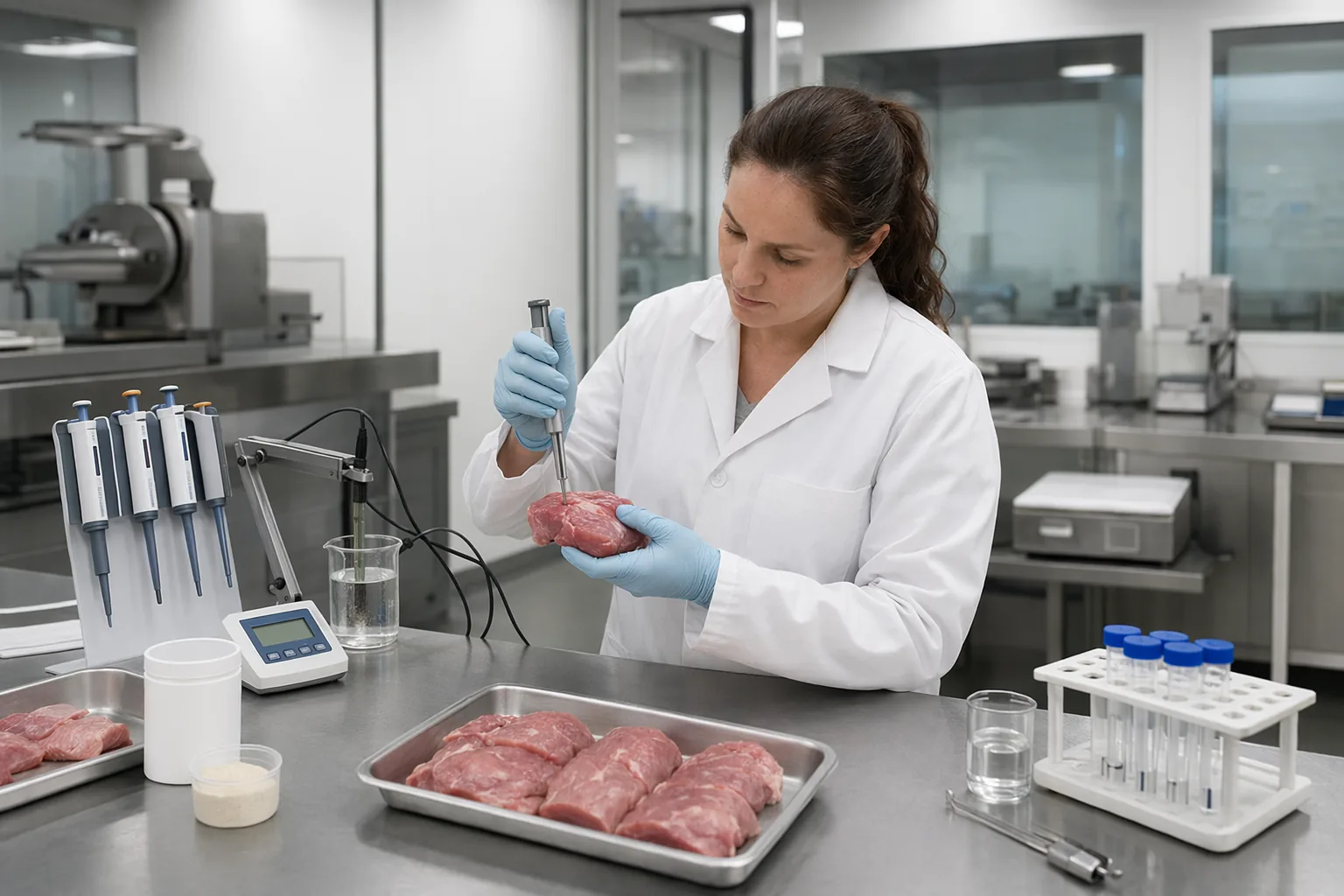
For processors troubleshooting variable tenderness, ficin can support controlled protein hydrolysis when dosage, contact time, pH, temperature, and supplier specifications are validated at pilot scale.
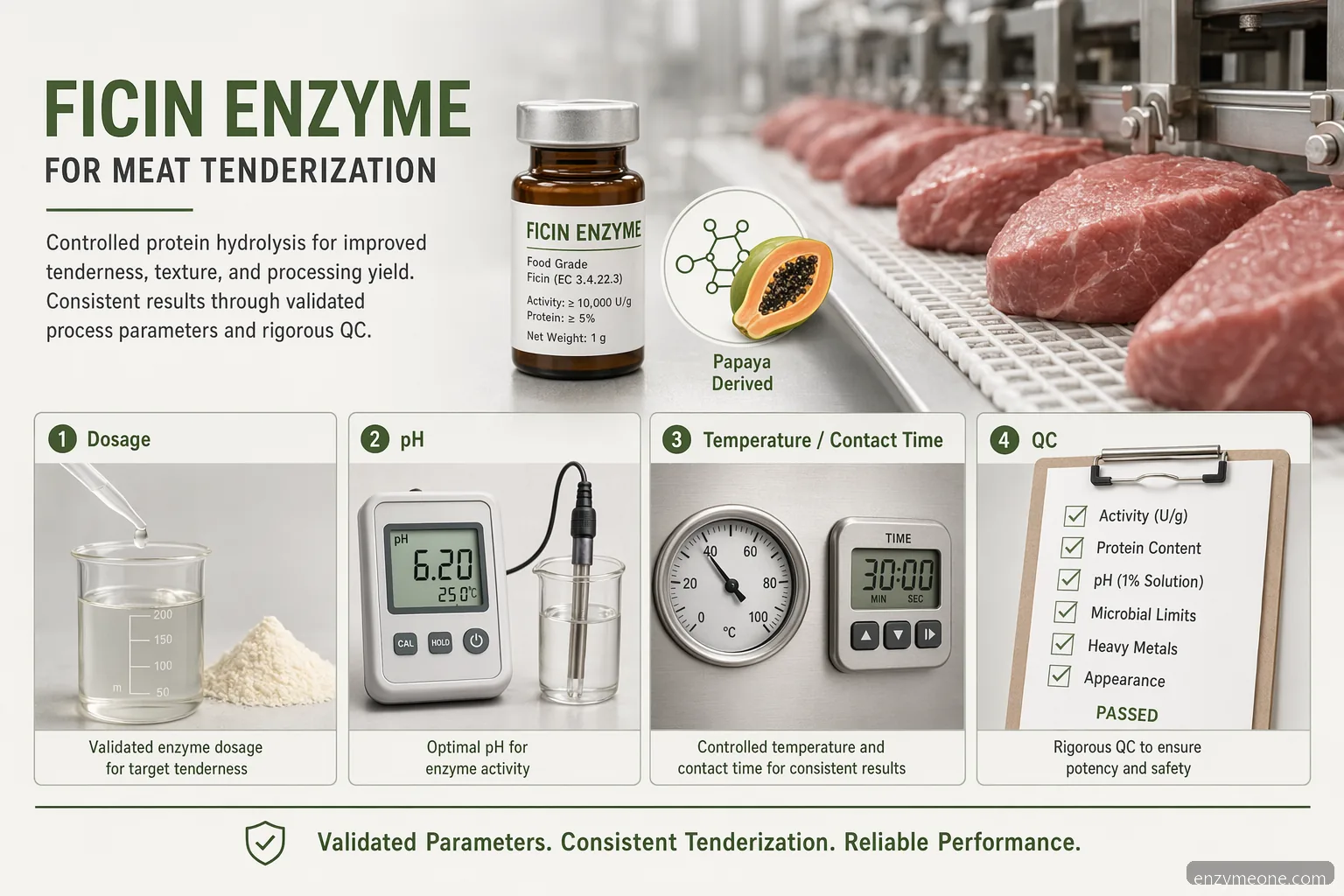
Why Ficin Is Used in Industrial Meat Tenderization
Ficin is a proteolytic enzyme obtained from fig latex and used by meat processors that need targeted tenderization without relying only on mechanical aging. As a ficin enzyme for meat tenderization, it hydrolyzes proteins involved in toughness, including muscle proteins and collagen-rich connective tissue. This makes it useful in injected, tumbled, or marinated beef, pork, poultry, and value-added products where raw material variability affects bite and consistency. Unlike a one-size-fits-all ficin meat tenderizer approach, industrial ficin meat tenderization should be managed by activity units, meat type, particle size, brine distribution, and hold time. A fig enzyme supplier for meat tenderization should help translate lab activity into plant conditions, because temperature abuse, uneven injection, or excessive dwell time can quickly create soft edges, purge, or texture defects.
Best fit: controlled tenderization of variable or tougher cuts • Common formats: powder or liquid enzyme preparations • Primary risk: over-hydrolysis from excess dosage or contact time
Starting Dosage Bands and Trial Design
For troubleshooting, start with a conservative ladder trial rather than moving directly to full production. A practical screening range for ficin for meat tenderization is often 0.005% to 0.10% enzyme preparation by meat weight, adjusted for declared activity on the COA and the supplier’s TDS. Some high-activity preparations may require lower use rates, while diluted blends may require more. Build a matrix with at least three dosage levels, two contact times, and one untreated control. In injection systems, calculate dosage on green meat weight and verify pickup. In tumble marinades, confirm brine distribution and drain loss. The most useful cost-in-use number is not price per kilogram of enzyme, but cost per metric ton of finished meat at the dosage that meets texture, yield, and sensory targets.
Suggested first screen: 0.005%, 0.025%, 0.05%, and 0.10% preparation • Always normalize by enzyme activity units, not only product weight • Include a no-enzyme control and current-process benchmark • Track finished yield and rework risk alongside tenderness
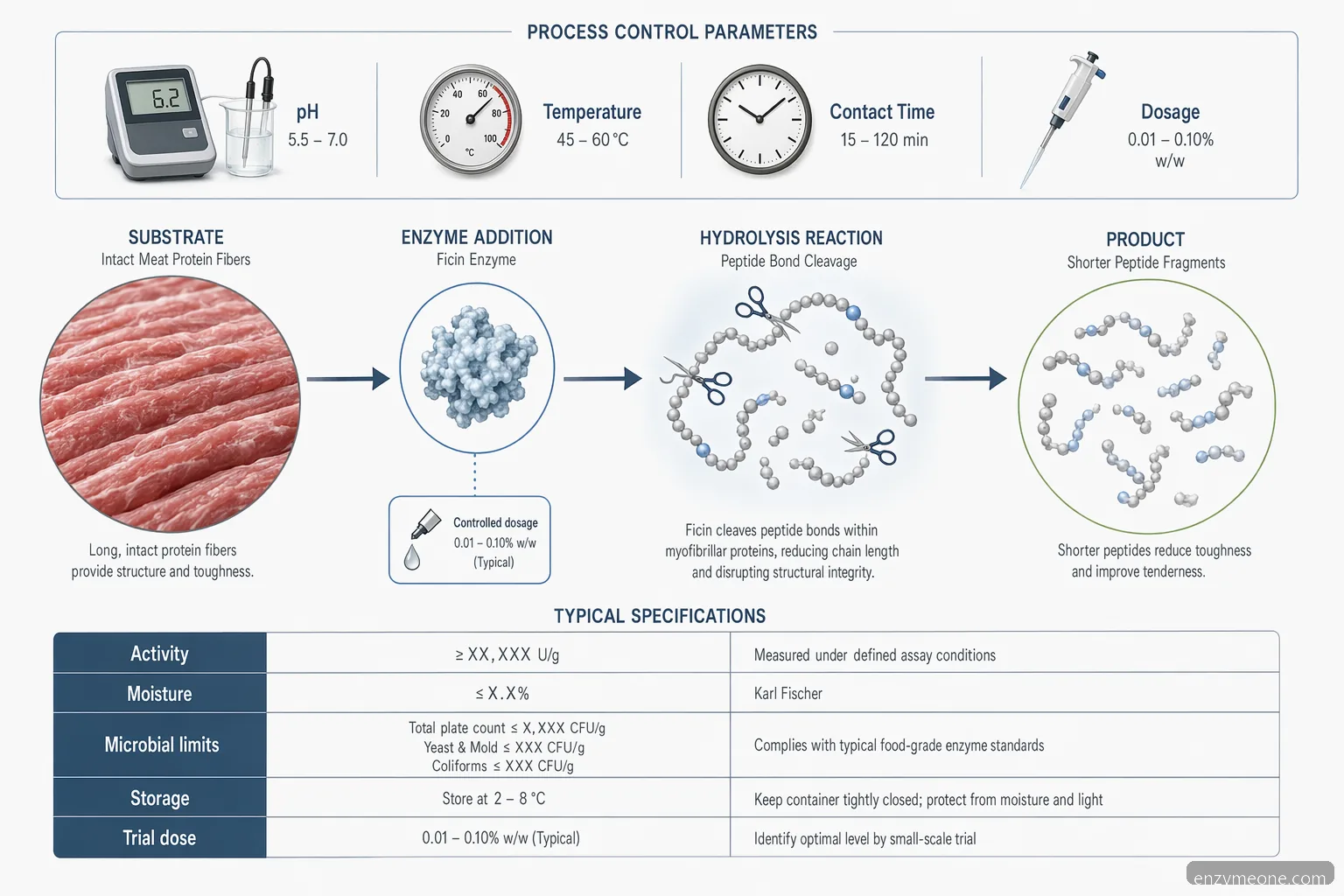
pH, Temperature, and Contact Time Controls
Ficin enzyme meat tenderization is sensitive to processing conditions. Ficin generally performs well in mildly acidic to near-neutral systems, with many meat trials starting around pH 5.5 to 7.0. Activity usually increases as temperature rises, but meat quality and food safety constraints often require chilled application followed by controlled holding. For marinated raw meat, processors commonly validate enzyme contact under refrigerated conditions, then rely on cooking to stop activity. If a warm enzyme step is used in a controlled process, pilot trials often evaluate 40°C to 55°C for short contact, but this must fit the product, microbial controls, and regulatory plan. Thermal inactivation depends on formulation and time; many processors verify reduction of activity during cooking above typical protein-denaturation temperatures rather than assuming complete deactivation.
Trial pH window: approximately 5.5 to 7.0 for many meat systems • Chilled contact helps control over-tenderization • Warm steps need validated time, temperature, and food safety controls • Cooking should be confirmed to stop residual tenderizing activity
Common Troubleshooting Issues in Plant Trials
When industrial ficin enzyme meat tenderization gives inconsistent results, the root cause is often process distribution rather than enzyme chemistry. Uneven injection patterns, blocked needles, poor vacuum tumbling, variable meat thickness, and inconsistent dwell time can create patchy texture. If the surface becomes mushy while the center remains tough, reduce dosage, improve distribution, or extend mechanical mixing at lower enzyme strength. If tenderness is insufficient, check that the enzyme was not exposed to excessive heat, oxidizing sanitizers, or incompatible ingredients before use. Salt, phosphate, acidulants, and marinades can influence pH and water binding, so the complete formulation must be tested. For an industrial fig enzyme meat tenderization program, trend each batch by pickup, pH, temperature at addition, hold time, cook yield, and texture results.
Mushy surface: lower dose or improve penetration • No effect: verify activity, storage, pH, and exposure to heat • High purge: review protein breakdown level and marinade balance • Patchy tenderness: audit injection or tumbling uniformity
QC Checks and Supplier Qualification
A qualified ficin supplier for meat tenderization should provide documents and technical data that allow procurement, R&D, quality, and production teams to compare batches. Request a COA with activity value and test method, a TDS with recommended handling and application guidance, and an SDS for safe storage and plant use. Ask how activity is defined, because casein, hemoglobin, gelatin, or internal methods may not be directly interchangeable. Supplier qualification should also review country of origin, lot traceability, microbiological limits, heavy metal limits if relevant, carrier ingredients, allergen statements, and shelf life. Before approval, run pilot validation on your actual meat, brine, equipment, and cooking profile. The best ficin enzyme supplier for meat tenderization will support scale-up with dosage calculations, sample lots, and cost-in-use modeling.
Required documents: COA, TDS, SDS, and batch traceability • Confirm activity method before comparing suppliers • Validate microbiological and contaminant specifications • Approve only after pilot and plant-scale confirmation
Technical Buying Checklist
Buyer Questions
Begin with a ladder trial rather than a single fixed dose. A common screening range is about 0.005% to 0.10% enzyme preparation by meat weight, adjusted for the activity value on the COA. Include an untreated control, record pickup and hold time, and evaluate tenderness, cook yield, purge, and sensory texture before selecting a production dose.
Many industrial ficin meat tenderization trials start in the mildly acidic to near-neutral range, around pH 5.5 to 7.0. The best pH depends on meat type, marinade ingredients, salt, phosphate, and acidulants. Measure the actual brine and meat system pH, not only the formula target, because small shifts can change protein hydrolysis and water binding.
Control dosage, distribution, temperature, and time. Use lower enzyme strength with better injection or tumbling uniformity if surfaces become soft while centers remain tough. Keep marinated meat refrigerated unless a warm step is fully validated. Confirm that the cooking process stops further tenderizing activity, and set maximum hold times for work-in-process.
Do not compare only price per kilogram. Request COA, TDS, SDS, activity method, shelf life, storage conditions, carrier ingredients, and traceability. Run both samples at equivalent activity units in your meat system, then compare cost-in-use, tenderness, yield, purge, flavor impact, handling, and batch consistency. Supplier support during pilot validation is also important.
Ficin, papain, and bromelain are all plant proteases, but they are not interchangeable without validation. They can differ in activity profile, substrate preference, pH response, temperature response, and inactivation behavior. If you switch from another protease to ficin enzyme for meat tenderization, repeat dosage, time, temperature, yield, and sensory trials before production approval.
Ficin for Research & Industry
Need Ficin for your lab or production process?
ISO 9001 certified · Food-grade & research-grade · Ships to 80+ countries
Frequently Asked Questions
What dosage should I start with for ficin enzyme meat tenderization?
Begin with a ladder trial rather than a single fixed dose. A common screening range is about 0.005% to 0.10% enzyme preparation by meat weight, adjusted for the activity value on the COA. Include an untreated control, record pickup and hold time, and evaluate tenderness, cook yield, purge, and sensory texture before selecting a production dose.
What pH is best for ficin in meat processing?
Many industrial ficin meat tenderization trials start in the mildly acidic to near-neutral range, around pH 5.5 to 7.0. The best pH depends on meat type, marinade ingredients, salt, phosphate, and acidulants. Measure the actual brine and meat system pH, not only the formula target, because small shifts can change protein hydrolysis and water binding.
How do I prevent over-tenderization with ficin?
Control dosage, distribution, temperature, and time. Use lower enzyme strength with better injection or tumbling uniformity if surfaces become soft while centers remain tough. Keep marinated meat refrigerated unless a warm step is fully validated. Confirm that the cooking process stops further tenderizing activity, and set maximum hold times for work-in-process.
How should I compare two ficin suppliers?
Do not compare only price per kilogram. Request COA, TDS, SDS, activity method, shelf life, storage conditions, carrier ingredients, and traceability. Run both samples at equivalent activity units in your meat system, then compare cost-in-use, tenderness, yield, purge, flavor impact, handling, and batch consistency. Supplier support during pilot validation is also important.
Is ficin the same as other plant proteases used in tenderization?
Ficin, papain, and bromelain are all plant proteases, but they are not interchangeable without validation. They can differ in activity profile, substrate preference, pH response, temperature response, and inactivation behavior. If you switch from another protease to ficin enzyme for meat tenderization, repeat dosage, time, temperature, yield, and sensory trials before production approval.
Related: Ficin Enzyme Uses for Industrial Proteolysis
Turn This Guide Into a Supplier Brief Request ficin samples, COA/TDS/SDS, and pilot-scale dosage support for your meat tenderization process. See our application page for Ficin Enzyme Uses for Industrial Proteolysis at /applications/ficin-enzyme-uses/ for specs, MOQ, and a free 50 g sample.
Contact Us to Contribute